Use cases

Three operational problems you can stop managing by hand.

These are not feature lists. They are three stories about work that depended on paper, fragmented information and constant calls — and about the operational layer that changed it.

From declaration to accountable decision

Scrap Control

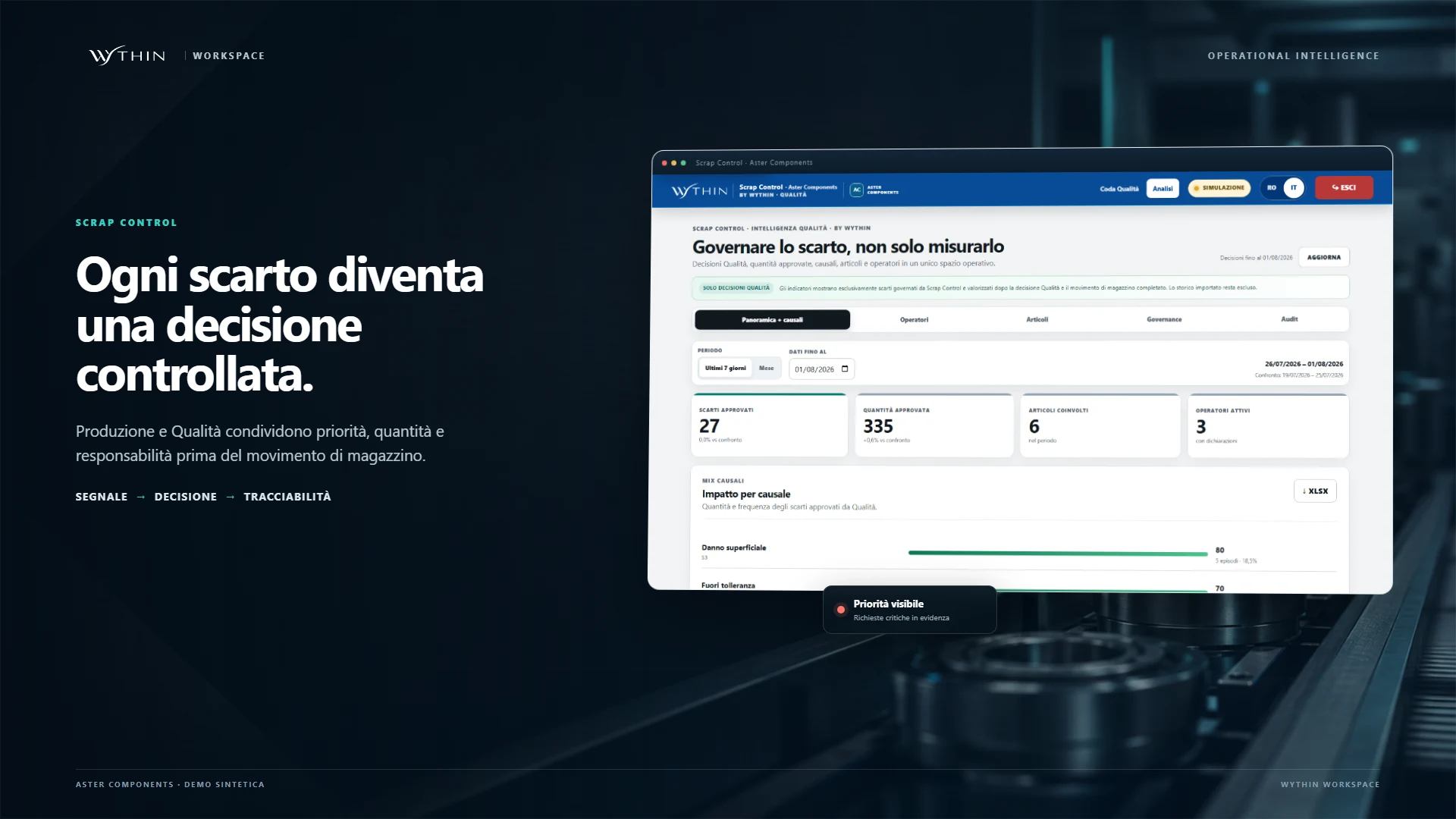
A sheet of paper used to carry the entire scrap process: item code, quantity, defect and an operator's handwriting. Scrap Control turned that fragile handoff into a guided, traceable flow inside the existing WMS process.
2 h/day → <10 minreported daily declaration time in this use caseOperational result supplied by Wythin. The published visuals use synthetic data.
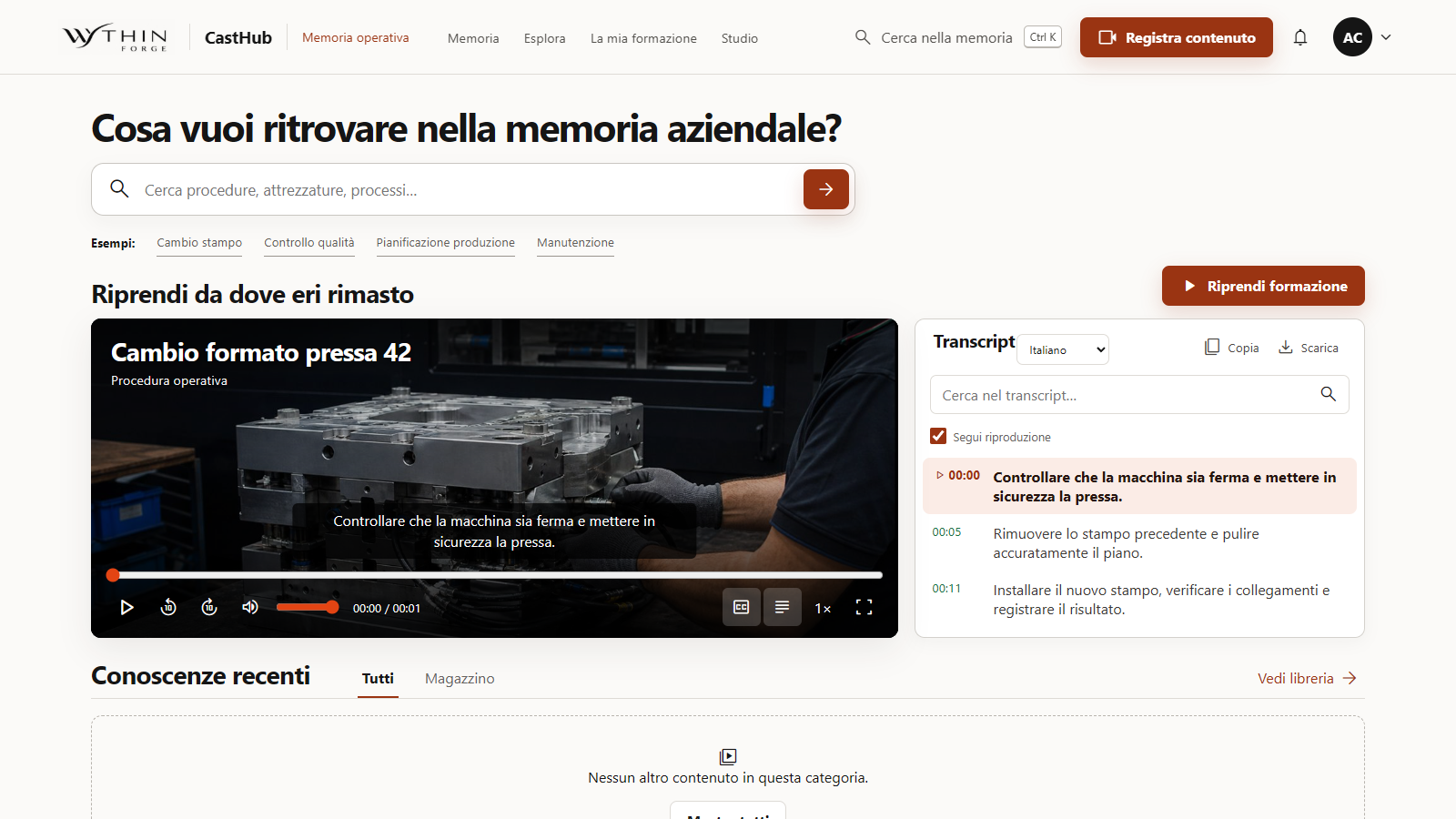
Scrap Control dashboard and guided operator interface shown together in an industrial product composition
Scrap Control connects the operator station, the Quality decision queue and analytics without replacing the WMS.

The story

The process lived on paper

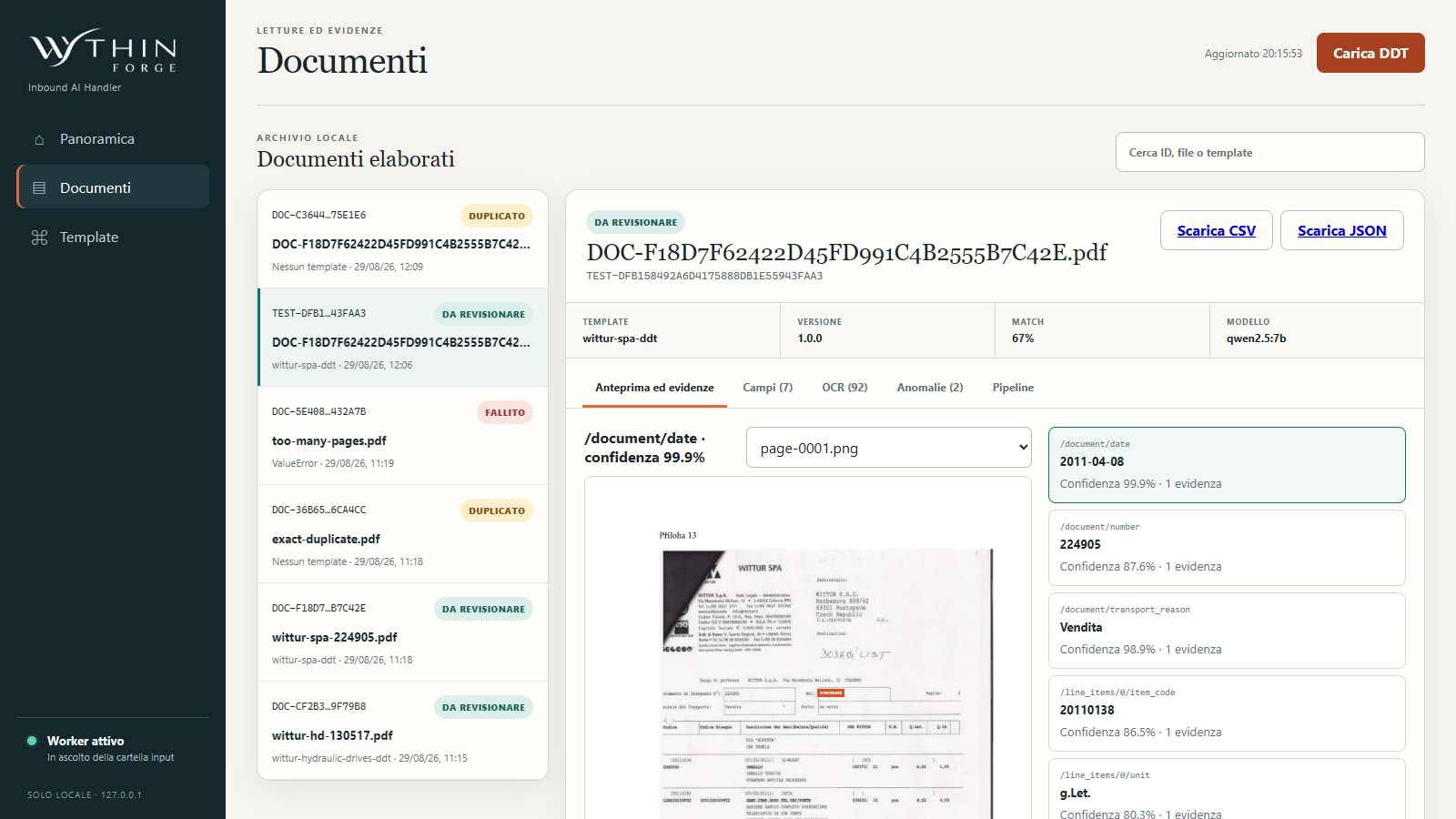
Operators declared scrap on loose sheets: material code, quantity and the defect they had found. That paper then travelled from production to Quality, carrying information that could be incomplete, hard to read or interpreted differently from one operator to the next.

The risk was not only a transcription error. Every sheet introduced waiting, a manual handoff and another place where traceability could break.

The burden moved to Quality

Quality then had to translate the paper into the WMS. The system was essential, but it had not been designed around this exact scrap workflow: completing a declaration meant moving across interfaces, performing several actions and manually searching the application to reconstruct the history.

Then Scrap Control arrived

Scrap Control entered the existing WMS process as an intelligent operational layer. At a production station, the operator signs in with personal credentials, scans the barcodes already present on the material and completes the declaration through a short guided path. The application can suggest the most likely defect while leaving the operator in control of the choice.

Quality sees each new declaration immediately and, with one action, can take ownership and decide how to handle it from a single queue. The WMS remains the system of record; Scrap Control orchestrates the actions needed to reach the result with less friction.

On-premise by design

The application runs on-premise, without public internet access, and operates only inside the company network. Data stays within the environment while operators receive the response speed expected from a production tool.

What happens now

  • Users and badges

    The administrator creates accounts, assigns roles and issues badges for fast, controlled station access.

  • Guided operator flow

    Operators declare scrap, review what they submitted and follow the status of every declaration.

  • Quality governance

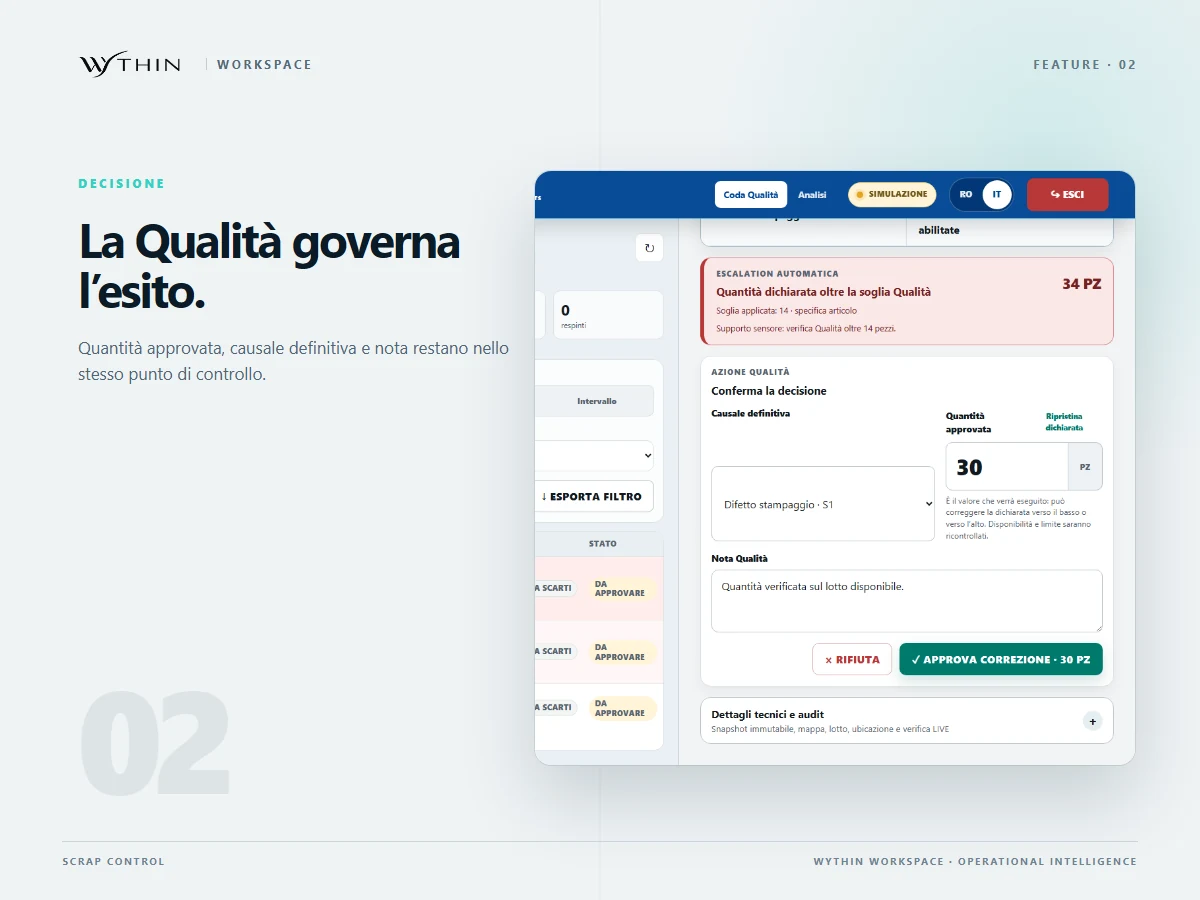
    Quality monitors priorities, approves or rejects with a reason, and analyses scrap by cause, item and operator.

The essential product evidence

Only the most useful screens are shown. Product visuals use synthetic scenarios and may preserve the original Italian interface; customer outcomes remain separate from demo values.
From purchase order to shared supplier action

Partners Operation

Partners Operation gives customer and supplier the same view of open purchase orders, real priorities and receiving labels — replacing chasing e-mails and parallel spreadsheets with one shared operational agreement.

Order → PDFpriority, preflight and print job in one flowThe showcase demonstrates print-job traceability with synthetic data; it does not represent printer-device telemetry.
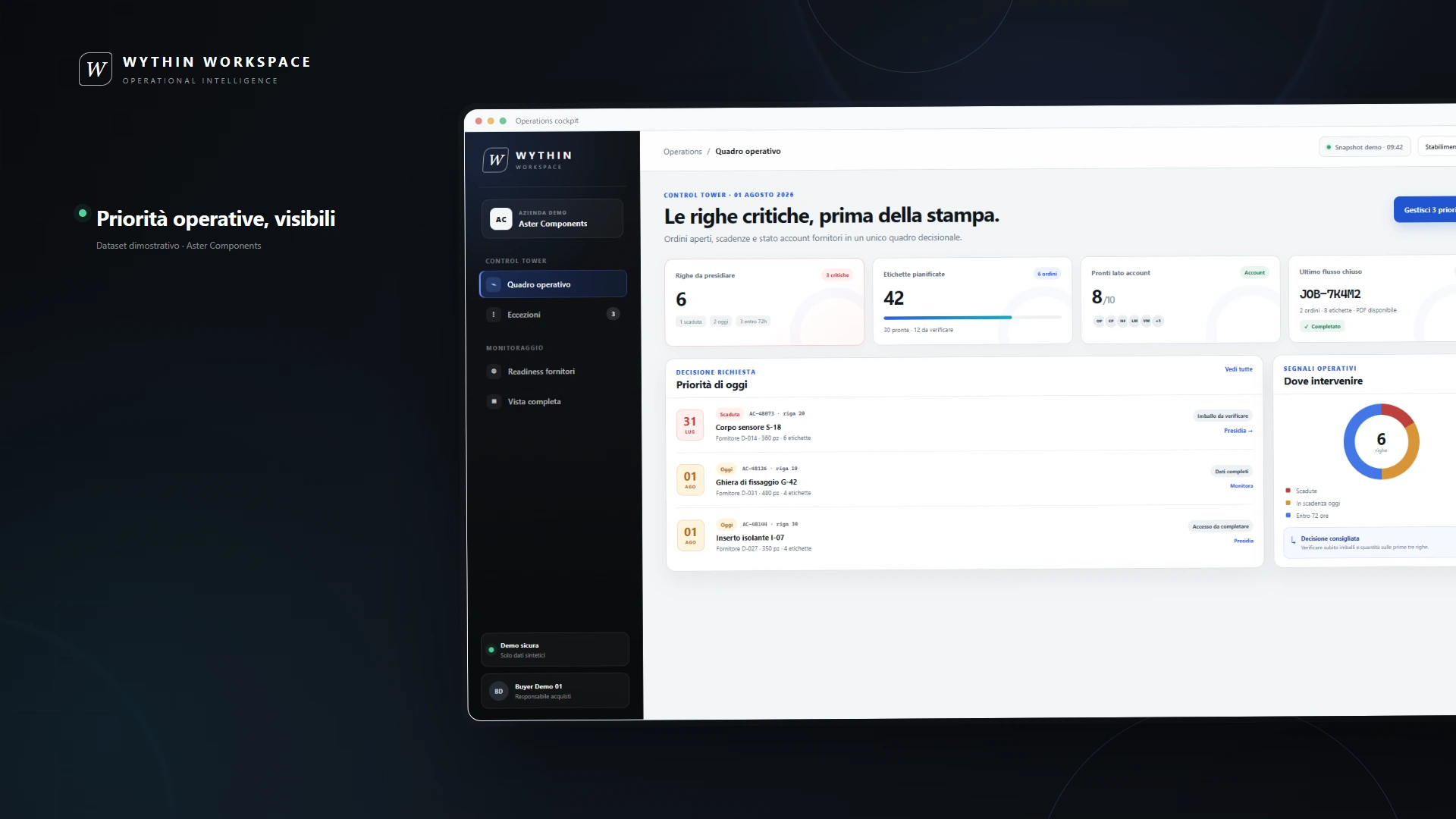
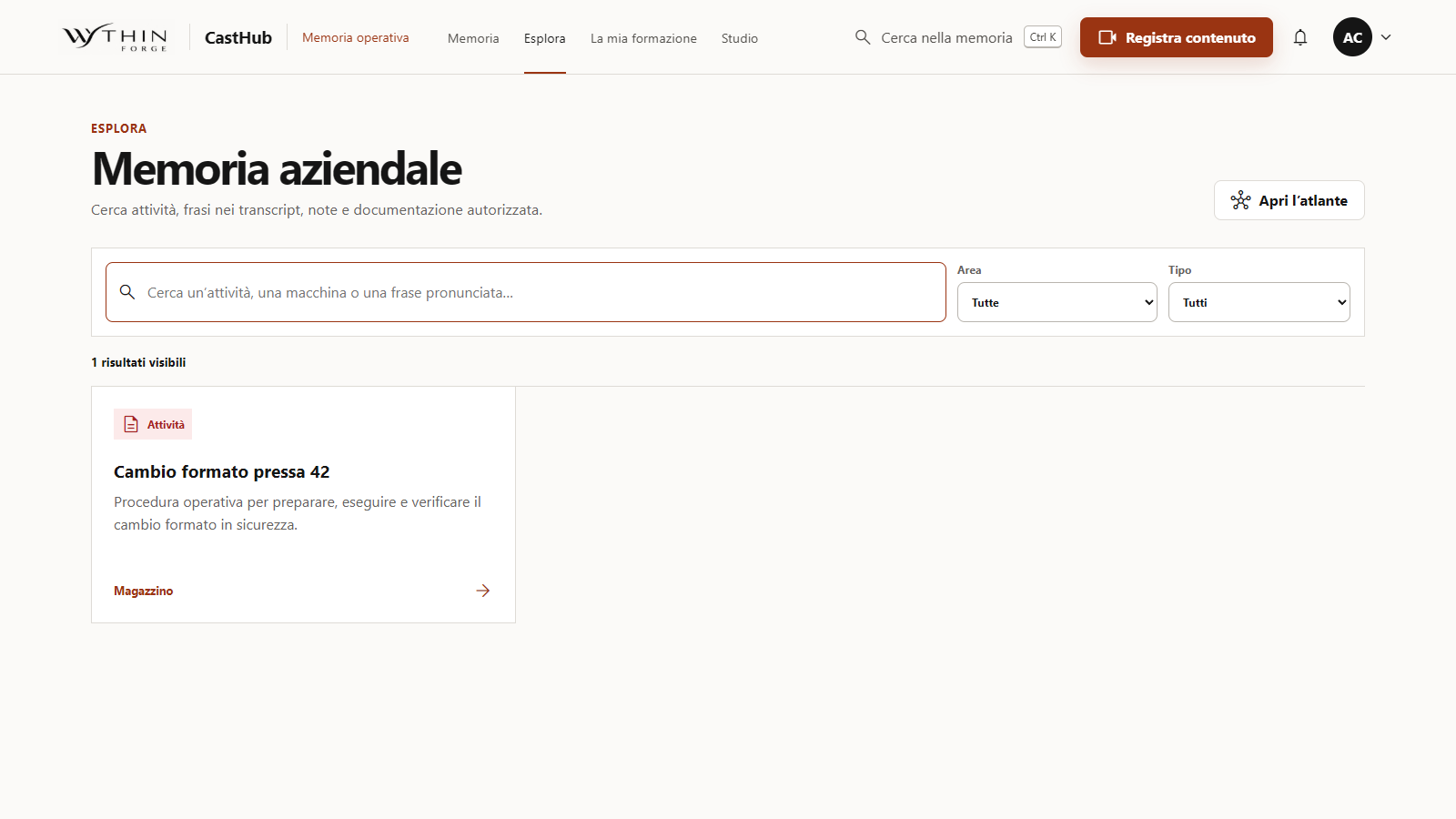
Partners Operation control tower with supplier readiness, order priorities and completed label jobs
Partners Operation turns WMS order data into a guided, verifiable supplier workflow.

The story

Priorities were scattered across e-mail and Excel

The WMS already knew the suppliers, their purchase orders and the dates materials were required. The problem began outside it: priorities were repeated in e-mails, copied into Excel files and explained again whenever plans changed.

Customer and supplier could both be working hard while still looking at different versions of what mattered next.

One secure bridge to the WMS

Partners Operation connects directly to the existing WMS and exposes only the context each supplier needs through reserved credentials. On entry, the supplier immediately sees purchase orders that have not yet been received, the requested date and the priorities to act on.

The portal becomes the common reference for valuable communication: the customer can guide attention without producing another file, and the supplier can act from the same current information.

The label starts from trusted order data

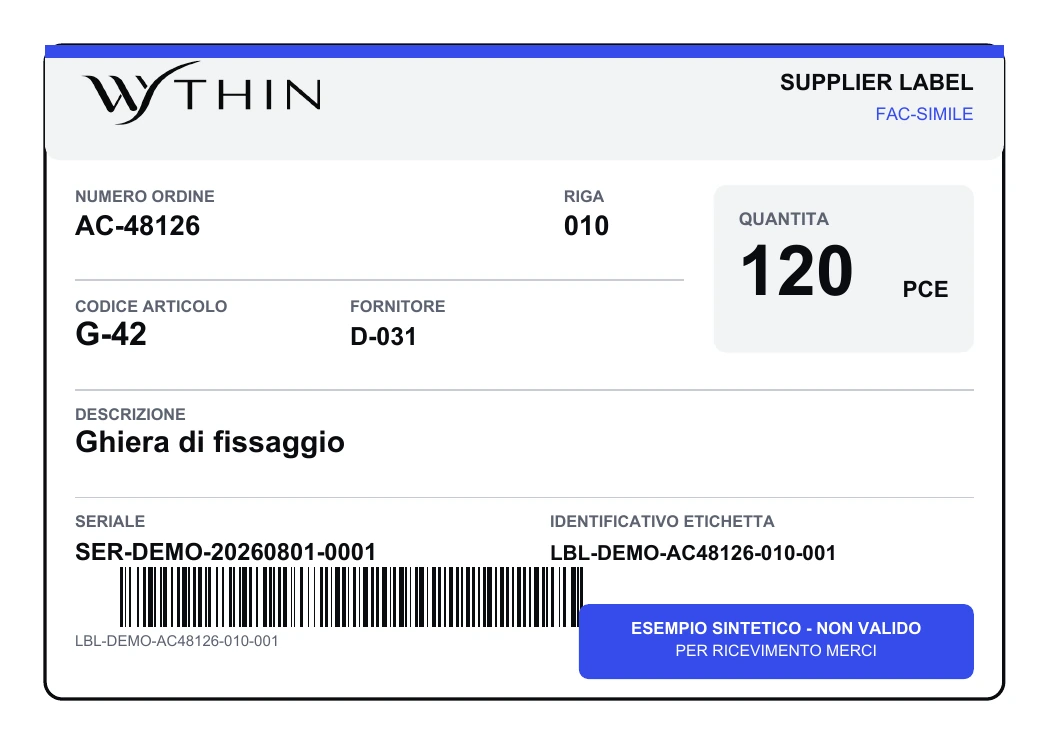
From the same portal, the supplier generates and prints the labels to apply to the product. Because those labels are created from WMS order data, the warehouse can scan them when the material arrives instead of rebuilding the identification at goods receipt.

This continuity reduces avoidable labelling errors and leaves a trace of what was printed, when and for which order.

What happens now

  • Supplier priorities

    Buyers expose the orders that need attention and give each supplier a clear next action.

  • Pre-print checks

    Quantity, packaging, residuals and layout are checked before the label PDF is generated.

  • Usage evidence

    Every generated job links document, orders, quantities, user, timestamp and status for remote coordination and KPI analysis.

The essential product evidence

Only the most useful screens are shown. Product visuals use synthetic scenarios and may preserve the original Italian interface; customer outcomes remain separate from demo values.

Show me how you coordinate suppliers today

One operational language

Operational Control

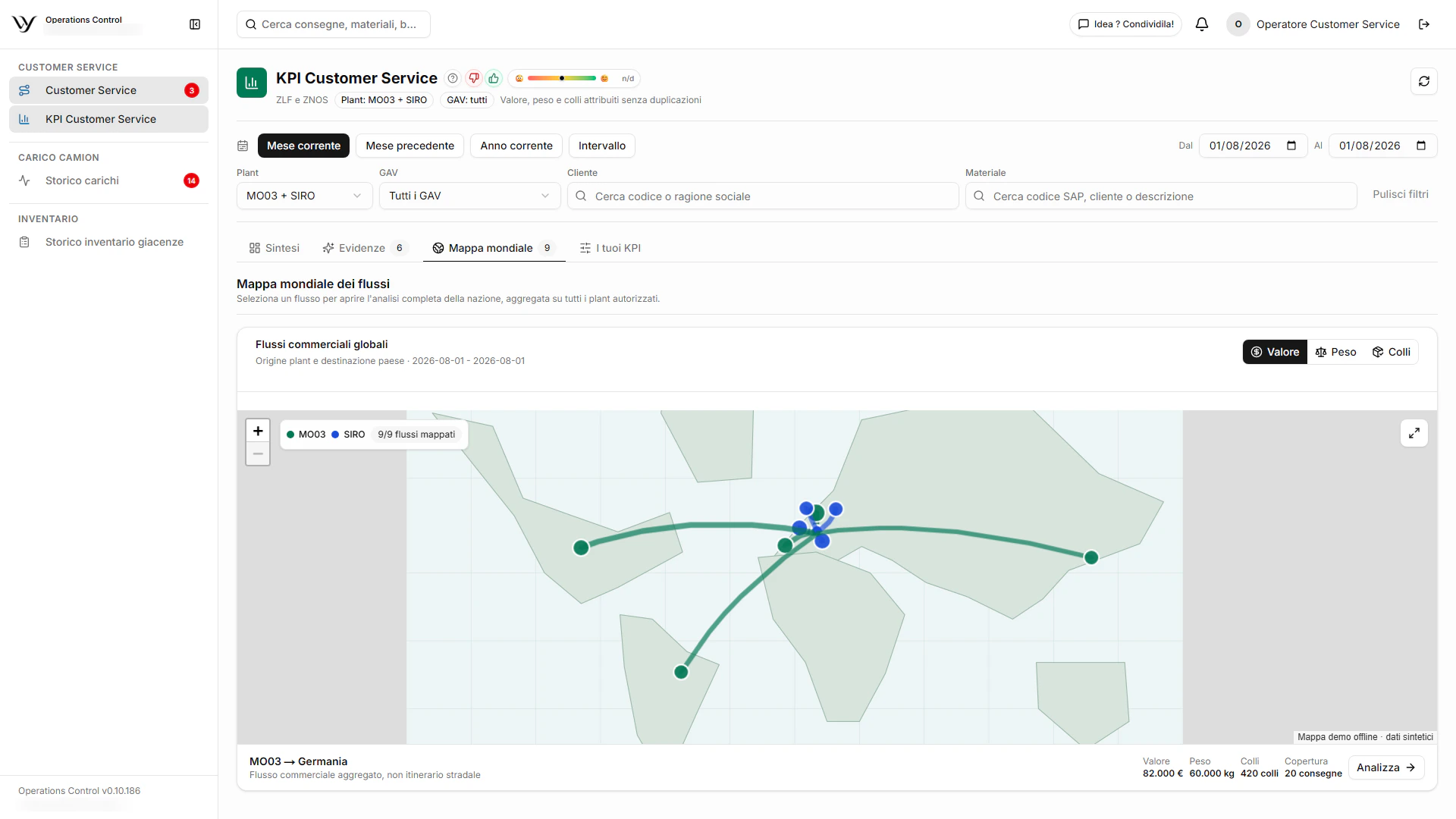
“This delivery is urgent.” When every request arrives with the same urgency, Customer Service and the warehouse need more than another message: they need one operational state that reaches the people handling the product.

Calls → shared statedeliveries, acceptance evidence and CMR in one placeThe public showcase uses synthetic scenarios and demonstrates product capabilities rather than customer KPI values.
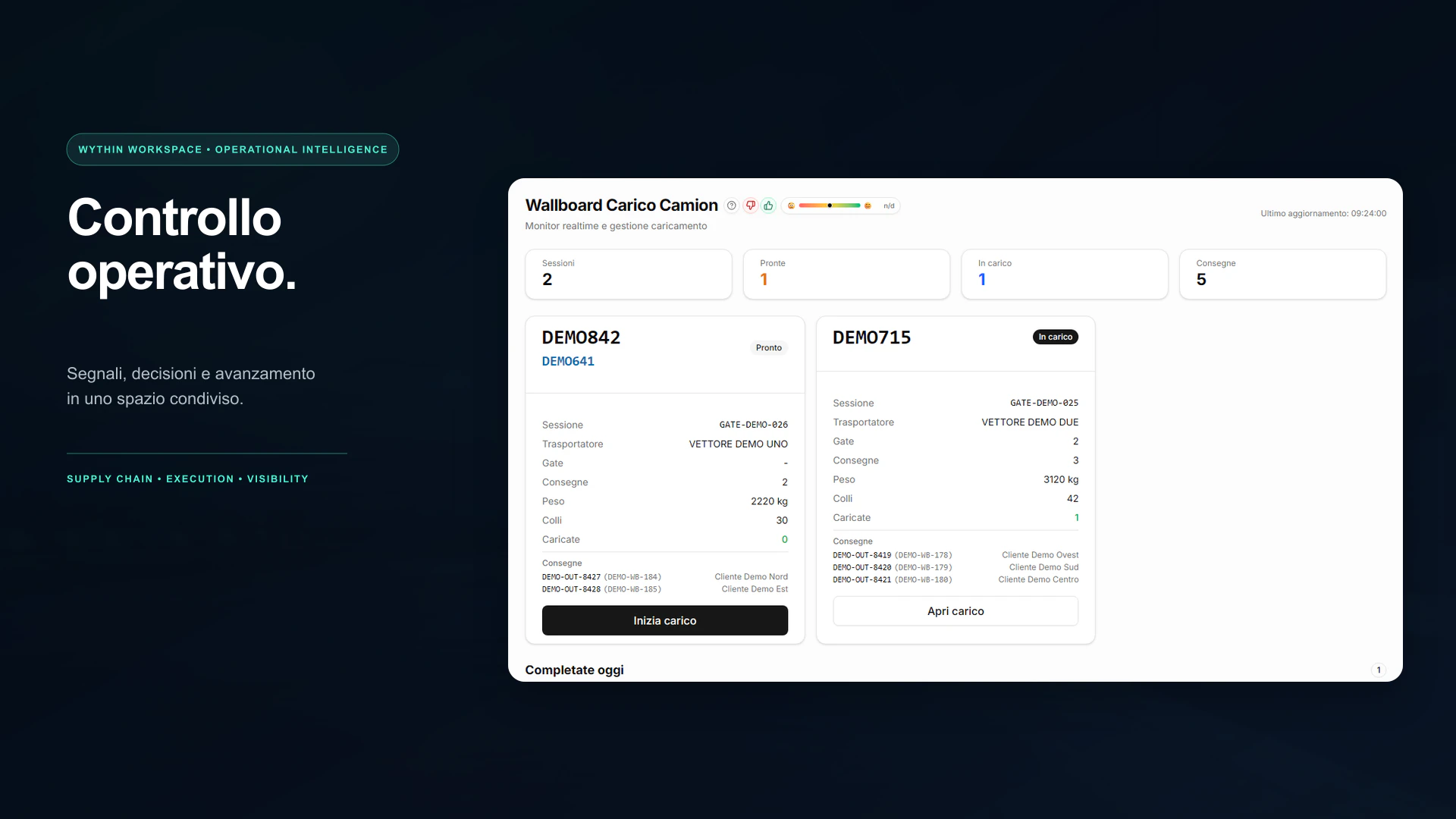
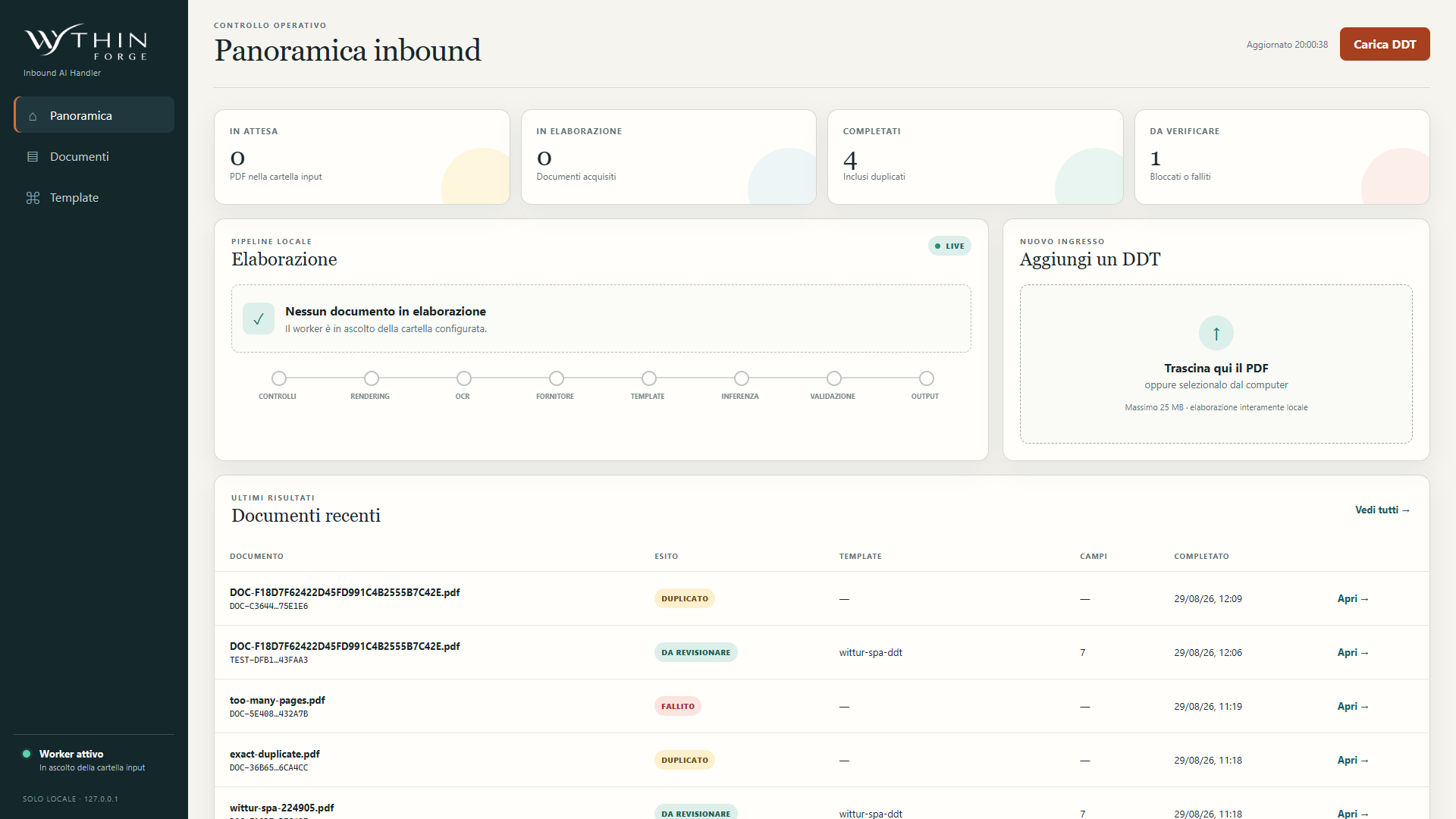
Operational Control warehouse wallboard with vehicle sessions and clear next actions
Operational Control gives Customer Service, gate and warehouse teams one current operational state.

The story

When everything is urgent, nothing is orchestrated

Customer Service and warehouse teams know the pattern: calls, messages and repeated “urgent” requests used to understand where a delivery is and what should happen next. Information crossed several people and places, often changing form before it reached the operator preparing the goods.

The real problem was not a lack of effort. It was the absence of a layer able to preserve and orchestrate the operating context.

A current state built from SAP data

Operational Control began with simple CSV imports from SAP. Deliveries, master data and the information needed by the flow create an internal database designed for the operational questions that the ERP alone did not answer quickly enough.

That database becomes the missing layer between Customer Service, plant gates and warehouse activity — without asking each team to translate the same information again.

The information survives every handoff

Vehicle acceptance, loading evidence and the actions performed at different gates remain connected even when different people operate at each point. The CMR is generated from the completed context and its issue, once a time-consuming repeated activity, becomes virtually immediate.

Priority becomes the exception again

An advance request or a serious delay still requires attention. Now a priority can reach, with one action, the people who physically package, prepare and ship the product. The shared state replaces the chaos of parallel Teams messages with one visible path and one accountable next action.

It is not presented as the final answer to every warehouse problem. It is the point where order replaces chaos and high-value work, waste and bottlenecks can finally be observed with the same facts.

What happens now

  • Delivery and vehicle control

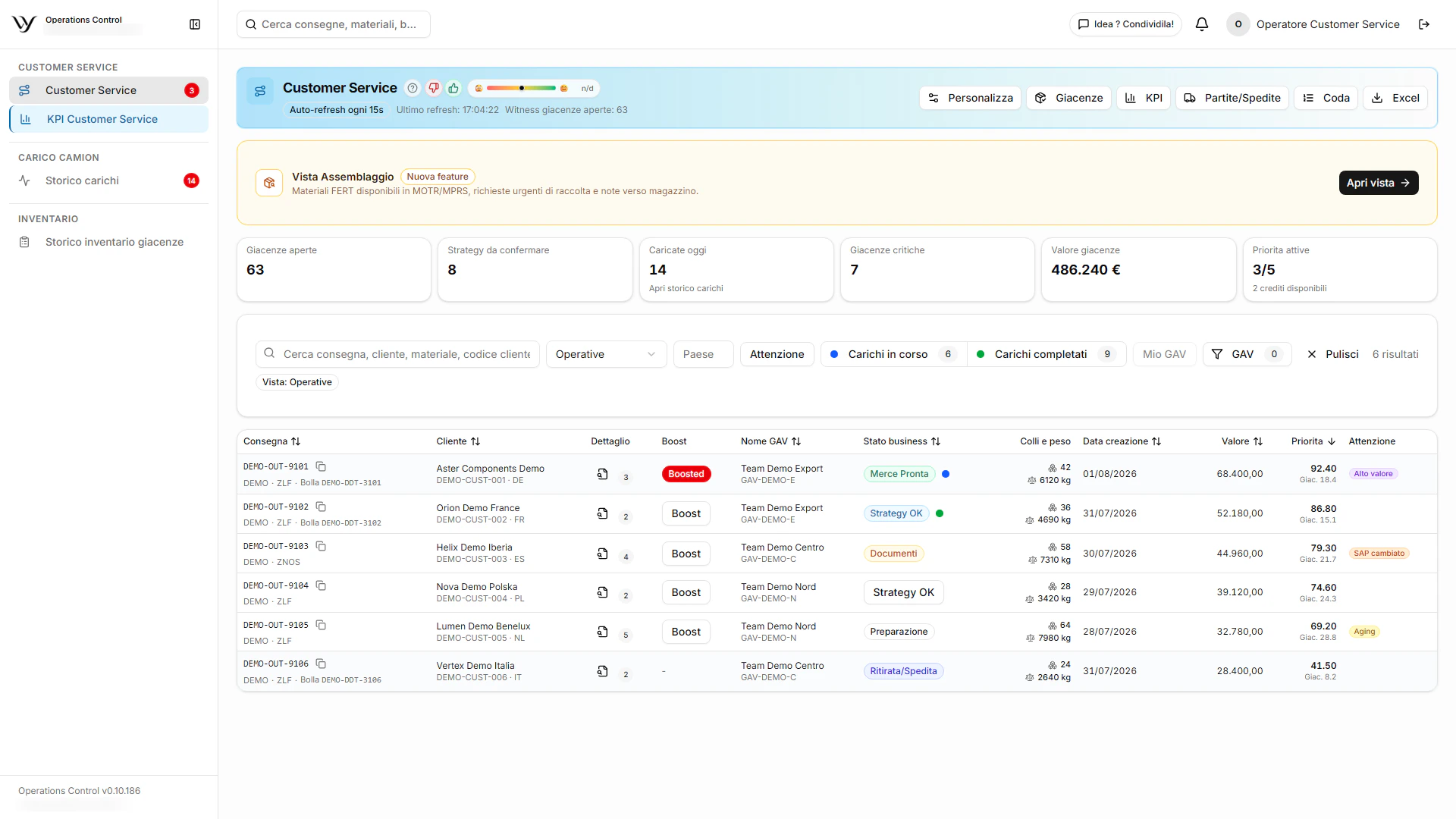
    Customer Service finds active, waiting and loaded deliveries quickly; vehicle acceptance preserves who handled each step and what was loaded.

  • Automatic CMR

    The CMR can be generated and reprinted from the completed operational record, removing a repetitive annual time cost.

  • Fleet, exceptions and RFID

    Forklifts and pallet trucks gain guided hour, use, maintenance, rental and note records. Material requests govern exceptions, while the long-range RFID prototype can create replenishment requests from real-time inventory signals over Wi-Fi.

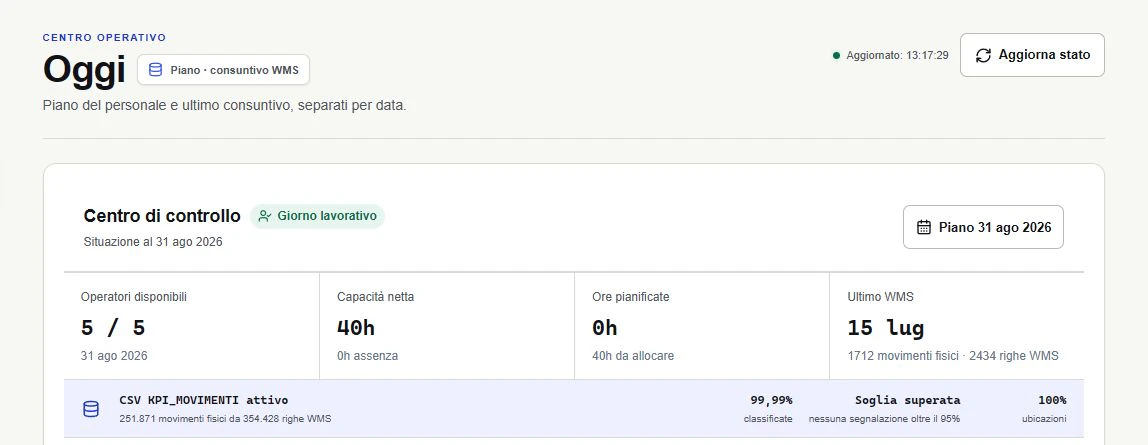
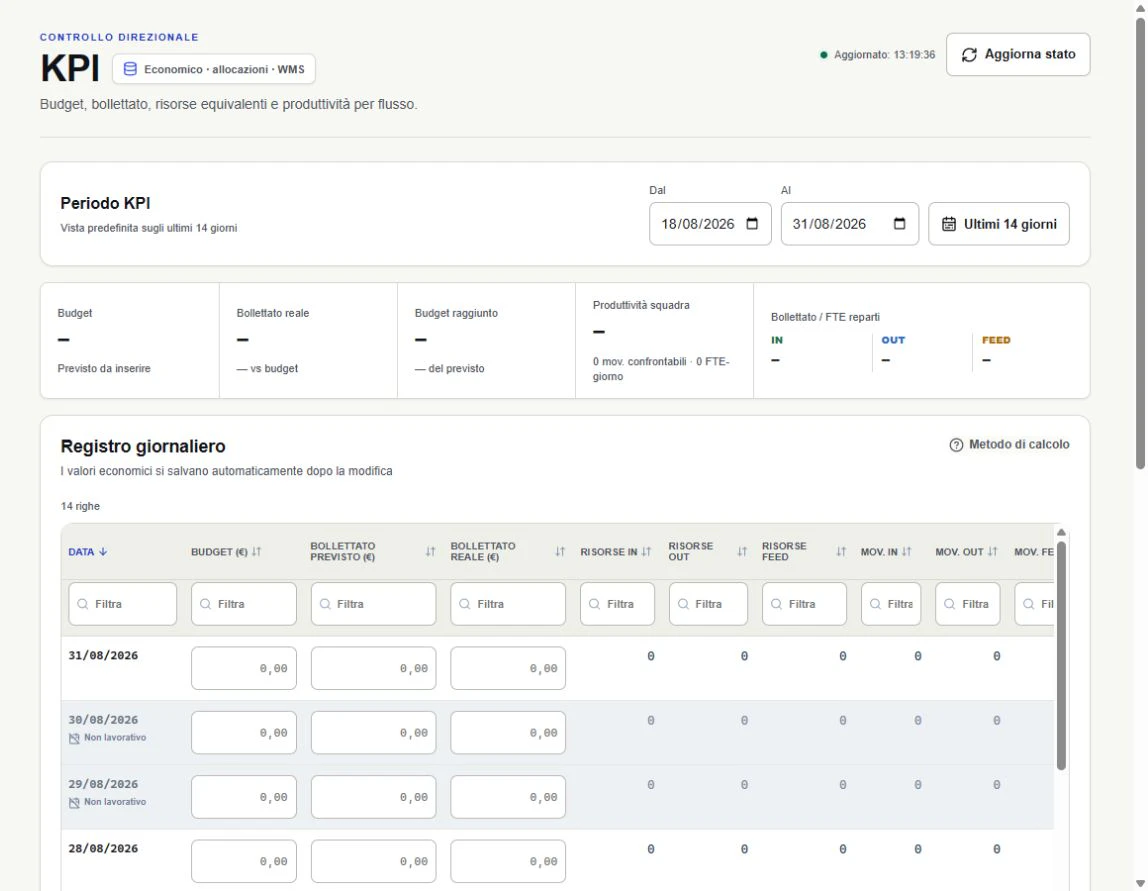
Synthetic Customer Service snapshot

deliveries
128
delivery value
€486,240
gross weight
312,480 kg
SAP packages
2,184

The essential product evidence

Only the most useful screens are shown. Product visuals use synthetic scenarios and may preserve the original Italian interface; customer outcomes remain separate from demo values.

A mission built together

A simple idea can become the system that changes how the work gets done.

These are three use cases with a concrete impact, not the boundary of what can be built. Bring a process, an early idea or an AI opportunity: your private Workspace keeps the project, live product previews and your feedback connected while we develop. It is Agile delivery placed directly in the client's hands — a mission whose progress we can read together.