
One operational language
WythinForge Operational Control
“This delivery is urgent.” When every request arrives with the same urgency, Customer Service and the warehouse need more than another message: they need one operational state that reaches the people handling the product.
The story
When everything is urgent, nothing is orchestrated
Customer Service and warehouse teams know the pattern: calls, messages and repeated “urgent” requests used to understand where a delivery is and what should happen next. Information crossed several people and places, often changing form before it reached the operator preparing the goods.
The real problem was not a lack of effort. It was the absence of a layer able to preserve and orchestrate the operating context.
A current state built from SAP data
Operational Control began with simple CSV imports from SAP. Deliveries, master data and the information needed by the flow create an internal database designed for the operational questions that the ERP alone did not answer quickly enough.
That database becomes the missing layer between Customer Service, plant gates and warehouse activity — without asking each team to translate the same information again.
The information survives every handoff
Vehicle acceptance, loading evidence and the actions performed at different gates remain connected even when different people operate at each point. The CMR is generated from the completed context and its issue, once a time-consuming repeated activity, becomes virtually immediate.
Priority becomes the exception again
An advance request or a serious delay still requires attention. Now a priority can reach, with one action, the people who physically package, prepare and ship the product. The shared state replaces the chaos of parallel Teams messages with one visible path and one accountable next action.
It is not presented as the final answer to every warehouse problem. It is the point where order replaces chaos and high-value work, waste and bottlenecks can finally be observed with the same facts.
What happens now
Delivery and vehicle control
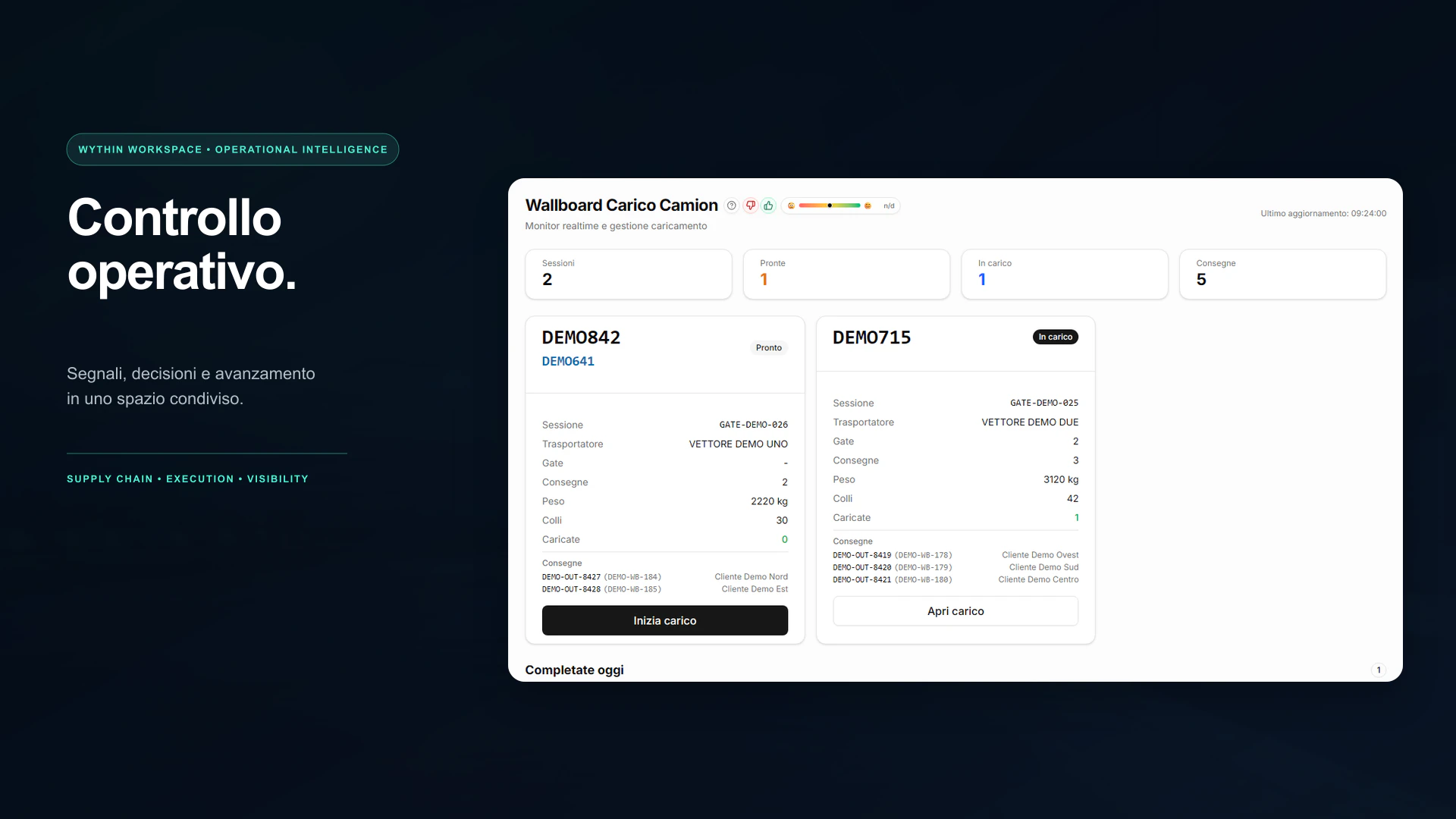
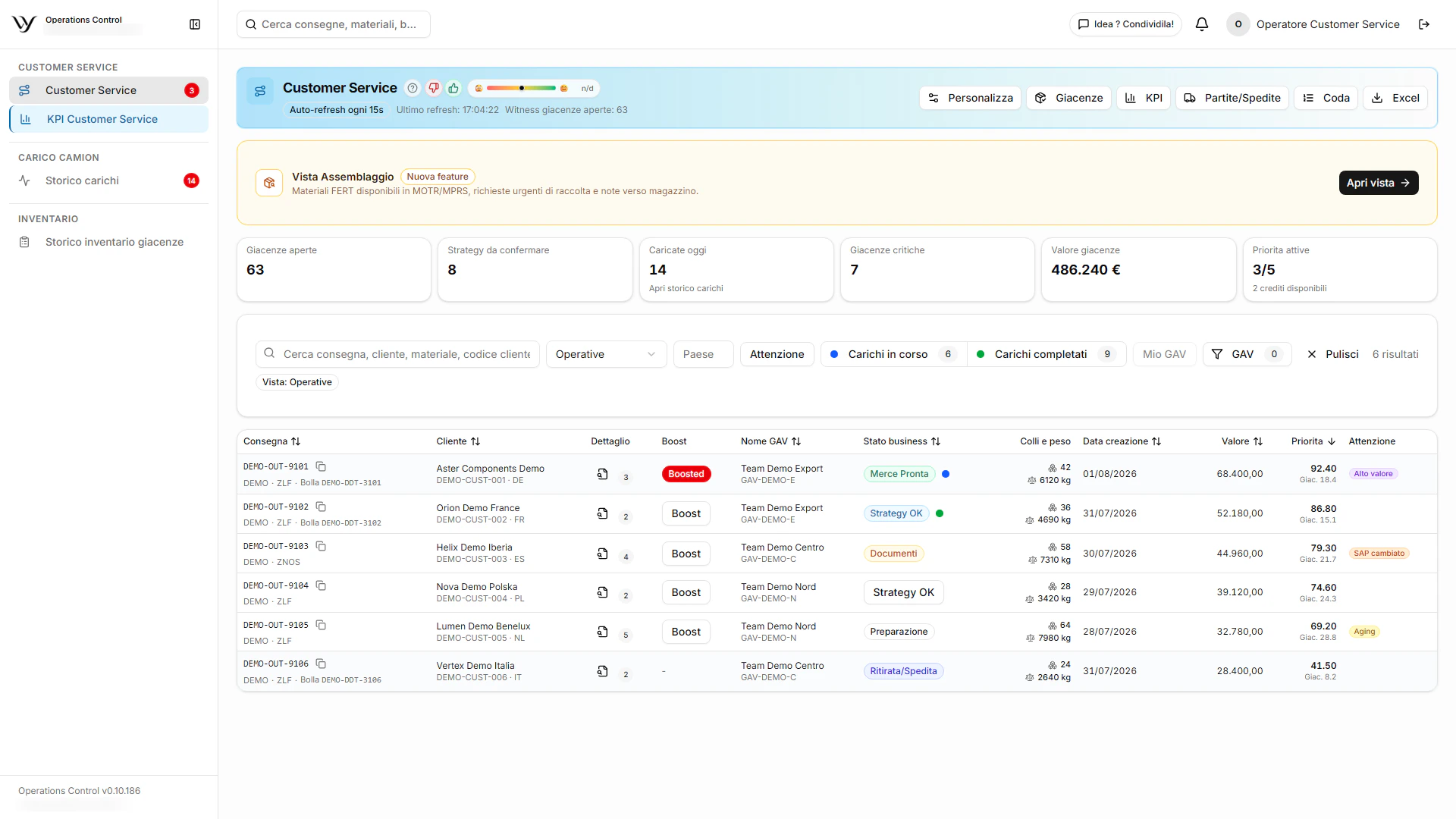
Customer Service finds active, waiting and loaded deliveries quickly; vehicle acceptance preserves who handled each step and what was loaded.
Automatic CMR
The CMR can be generated and reprinted from the completed operational record, removing a repetitive annual time cost.
Fleet, exceptions and RFID
Forklifts and pallet trucks gain guided hour, use, maintenance, rental and note records. Material requests govern exceptions, while the long-range RFID prototype can create replenishment requests from real-time inventory signals over Wi-Fi.
Synthetic Customer Service snapshot
- deliveries
- 128
- delivery value
- €486,240
- gross weight
- 312,480 kg
- SAP packages
- 2,184
The essential product evidence
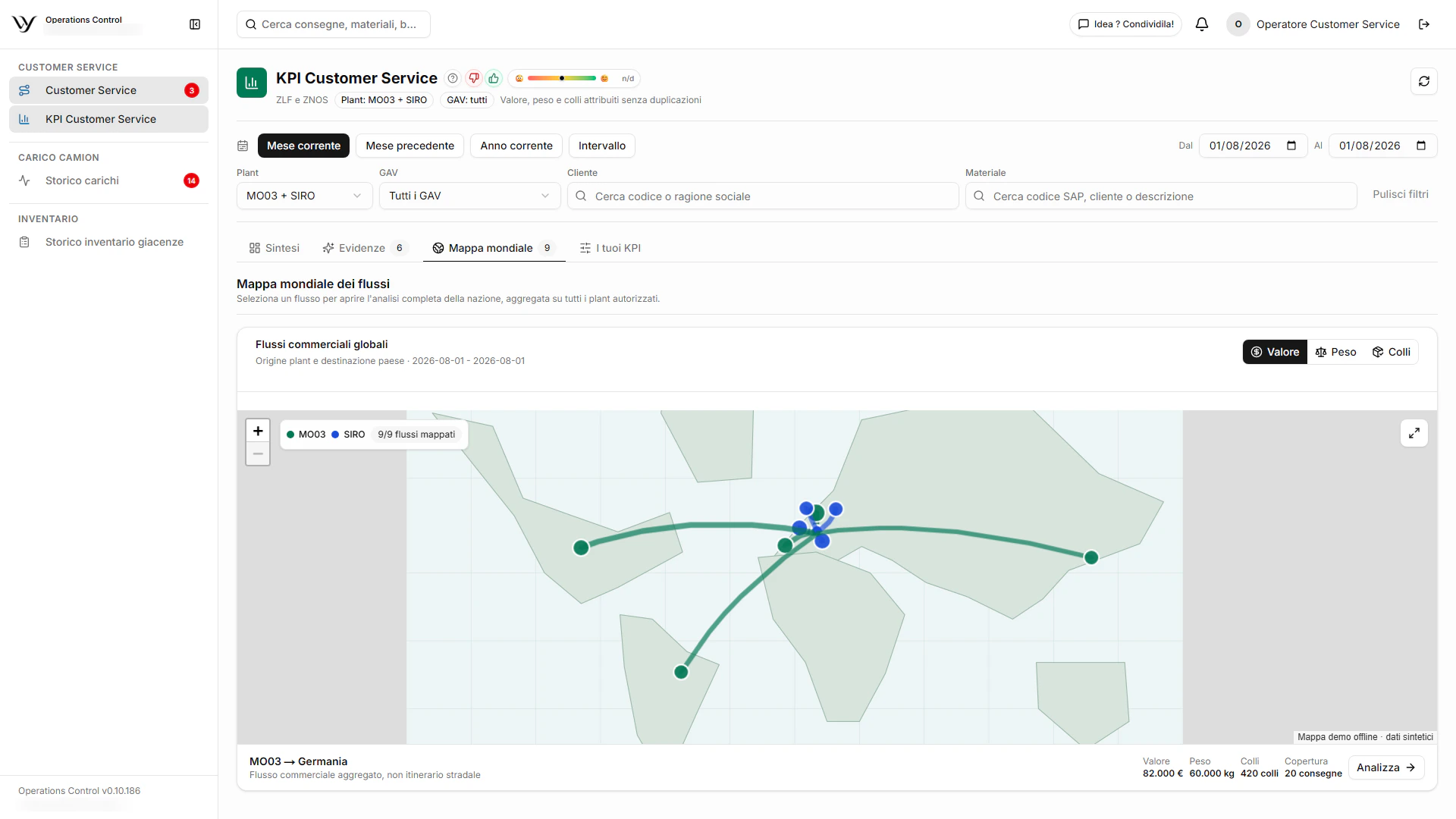
Only the most useful screens are shown. Product visuals use synthetic scenarios and may preserve the original Italian interface; customer outcomes remain separate from demo values.
Show me a coordination bottleneck